
To apply ceramic coating on black cars without creating visible high spots, you must perform flawless paint correction, work in small sections using a cross-hatch pattern, and wipe off the residue exactly when the coating begins to “flash” or sweat. Utilizing dual-layered microfiber towel wipe-downs under diffused, multi-angled LED lighting ensures that any excess product is leveled before it cures into a permanent, dark blemish. Implementing strict climate control and tracking flashing windows carefully will prevent the uneven thickness that causes these visual imperfections on dark paintwork.
The Chemical and Optical Reality of Dark Paintwork
Dark paint offers exceptional depth and gloss, but it also highlights swirl marks, scratches, and other surface defects more than lighter colors. Because it reflects light differently, even minor imperfections become highly visible.
During ceramic coating, uneven application can create high spots that appear as dark, oily streaks on black finishes. Achieving a flawless result requires proper surface preparation, controlled conditions, and precise leveling throughout the application process.
Ceramic Coating Technical Specifications
Liquid SiO2 (Silicon Dioxide) Concentration
Typically ranges from 70% to over 90% in professional-tier formulas, thereby establishing the dry film thickness and dictating the volatility of the solvent carrier matrix.
Flashing Window Range
The critical chemical transition period, lasting between 30 seconds and 3 minutes, during which carrier solvents evaporate and cross-linking to the clear coat begins.
Structural Curing Timeframe
Requires 12 to 24 hours for initial surface solidification and cross-linking in a controlled environment, and up to 7 full days to achieve maximum chemical resistance.
Film Deposition Profile
Engineered for microscopic cross-linking at a nominal thickness of 1-2 microns per layer. Because this layer is incredibly thin, even a fractional-micron variation in an un-leveled product creates a visible high spot.
Debunking the Single-Wipe Ceramic Protection Myth
The idea that ceramic coating is simply “wipe on, wipe off” is a common misconception. While many consumer products promote one-step application, achieving a flawless finish requires careful leveling throughout the curing process.
As the carrier solvents evaporate, the coating begins to harden. A single wipe can leave excess coating behind, creating uneven high spots that become visible after curing. Achieving a flawless finish requires a multi-towel leveling process to remove excess residue and ensure an even, uniform coating.
Complete Pre-Application Surface Preparation
You cannot successfully install a ceramic polymer layer on a dark finish without performing meticulous surface decontamination and corrective machine polishing. Any bonded environmental debris, industrial fallout, or below-surface scratches will prevent the liquid from bonding uniformly with the clear coat. This improper bonding leads to premature product breakdown and uneven leveling during application.
1. Multi-Stage Decontamination Washing
The process begins with an intensive decontamination wash executed entirely out of direct sunlight. First, apply a high-foaming, wax-free decontamination strip shampoo through a foam cannon to break down old waxes, traffic films, and surface oils.
Following the initial rinse, treat the panels with a dedicated iron-dissolving cleaner to remove embedded metallic particles from brake dust. Finish the decontamination phase with a professional detailing clay bar and an ultra-slick synthetic lubricant. This step gently lifts stubborn, bonded contaminants until the clear-coat surface is completely smooth to the touch.
2. Precision Paint Correction
Because true ceramic coatings act as a clear magnifying glass, they lock in and visually amplify every underlying clear-coat flaw. For dark panels, a dual-action orbital polisher paired with a fine-cut micro-abrasive finishing polish is required to remove micro-marring, spiderweb swirls, and holograms.
During a recent vehicle evaluation near the Armitage Pointe neighborhood, a dark sedan exhibited severe surface hazing caused by automatic tunnel car washes. By performing a dedicated, two-stage machine paint correction, our team restored absolute optical clarity to the clear coat. This created a pristine, completely flat foundation crucial for uniform ceramic adhesion.
3. Final Isopropyl Alcohol (IPA) Wipe Down
Even premium finishing polishes leave behind microscopic lubricants, heavy carrier solvents, and polishing oils that remain nestled within the pores of the clear coat. If left behind, these residues form a barrier that blocks the ceramic layer from bonding with the automotive paint.
Step-by-Step Leveling and Buffing Process
Proper installation of ceramic coating in Addison, IL requires controlled conditions, small working sections, and careful leveling to prevent high spots.
- Control the Environment
Work in a clean, enclosed space between 65–75°F with humidity below 60%. Use diffused LED lighting to reveal streaks and high spots. - Apply the Coating
Apply the coating to a suede applicator and work in 2×2 ft sections, using overlapping vertical and horizontal (cross-hatch) passes to ensure even coverage. - Watch for Flashing
Allow the coating to flash for 30 seconds to 2 minutes until a rainbow effect or small droplets appear, indicating it’s ready for leveling. - Level the Coating
Use a low-pile microfiber towel to gently remove excess coating and create an even layer. - Final Buff
Finish with a plush microfiber towel to remove residue, blend edges, and inspect under proper lighting for a flawless finish.
Practical Application Strategies and Troubleshooting
Managing your environment and adapting to real-time chemical changes is essential for achieving a flawless, long-lasting Addison ceramic coating finish across the entire vehicle.
Environmental Adjustments and Panel Management
Always work systematically from the top of the vehicle downward, addressing panels one at a time. For large real estate, such as hoods or roofs, subdivide the panel into four logical quadrants. When installing a ceramic layer in unconditioned or warmer spaces, remember that elevated temperatures speed up solvent evaporation, significantly shortening your window to level the product.
| Environmental Condition | Flashing Impact | Adjustments Required |
| High Temperature (>80°F) | Flash window drops below 45 seconds | Reduce working section to 1×1 foot; begin leveling immediately after spreading. |
| High Humidity (>65% RH) | Accelerated solvent evaporation and moisture drag | Accelerate your workflow speed; swap out leveling towels more frequently. |
| Low Temperature (<60°F) | Extended flash window (3+ minutes) | Allow more time before leveling; check closely to avoid pulling off wet product. |
How to Identify and Fix High Spots
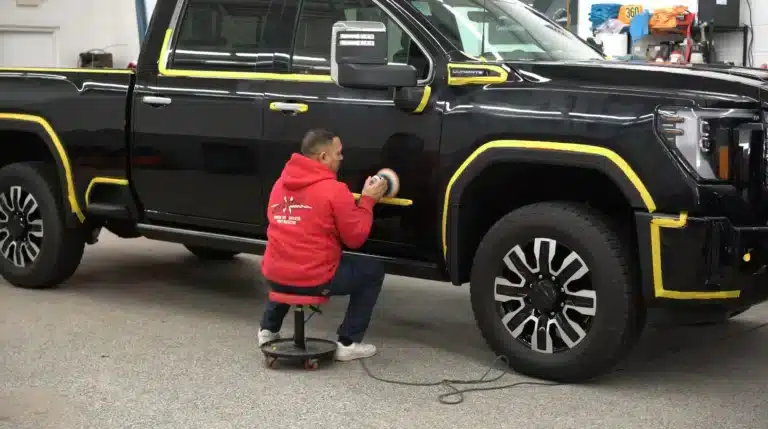
High spots appear as dark, cloudy, or oily-looking patches on the paint.
If detected within 30–60 minutes, apply a small amount of fresh coating to re-soften the area, then re-level it using the two-towel method.
Once fully cured, high spots cannot be wiped away. They must be machine-polished off, the surface cleaned with IPA, and the coating reapplied to that section.
Maintaining the Coated Surface
Once your ceramic polymer layer is successfully installed without high spots, practicing proper long-term care is vital to protect your hard work. During a routine maintenance consultation near the Kings Point area, it became clear how quickly aggressive wash habits can degrade a fresh coating. Automated tunnel car washes must be avoided at all costs; their heavy, dirt-laden plastic brushes scratch the finish, leaving behind fine micro-marring that destroys the gloss of dark paint.
Instead, use a two-bucket hand wash with grit guards and a pH-neutral shampoo. Dry the vehicle with a filtered blower or a plush microfiber towel to minimize contact. Following these practices helps preserve the deep, swirl-free gloss of your ceramic coating in Addison for years to come, despite frequent sun exposure, heat, and seasonal rain.
Protect Your Investment with the Experts
Achieving a flawless, mirror-like finish on a dark vehicle requires exceptional patience, specialized lighting, and a highly controlled environment. If you want the ultimate protection for your vehicle without the stress of installation mistakes, the professional team at Xtreme Auto Glass & Window Tint is here to help.
Our experienced technicians understand the unique demands of working with delicate dark paintwork. We operate out of a state-of-the-art facility tailored for high-end automotive protection, serving enthusiasts across the entire region, including the nearby residential communities around Meiers Farm. We provide precision multi-stage paint correction and apply elite, long-lasting ceramic coatings to keep your investment pristine.
Don’t leave your car’s finish to chance. Contact Us today to request a custom quote, speak with our paint protection specialists, and schedule an appointment to give your vehicle the high-end care it deserves!
People Also Ask
What happens if you leave high spots on a ceramic coating?
High spots harden within 24–48 hours and become permanent. They must be machine-polished off before the coating can be reapplied.
How long should a ceramic coating sit before wiping?
Typically 30 seconds to 3 minutes. Wipe once the coating flashes, showing a rainbow effect or small beads.
Can you apply a ceramic coating in direct sunlight?
No. Heat causes the coating to flash too quickly, leading to streaks and high spots. Apply in a shaded, climate-controlled area.
How many microfiber towels do I need to coat a black car?
Use 10–12 clean microfiber towels. Rotate them frequently to prevent cured residue from creating high spots.