
Ceramic coating doesn’t make existing scratches easier to remove, but it can help reduce minor surface marring by creating a protective layer over your vehicle’s clear coat. Light marks may affect the coating rather than the underlying paint. However, removing visible scratches often requires professional paint correction, which can also remove or weaken the coating.
How Does Ceramic Coating Protect Your Vehicle From Scratches
Ceramic coating is a liquid-applied protective product that chemically bonds with a properly prepared automotive surface as it cures. Many professional coatings use silicon dioxide-based chemistry to create a thin, durable layer over the vehicle’s clear coat.
Unlike traditional wax, which offers relatively short-term surface protection, professionally applied ceramic coatings are designed to provide longer-lasting hydrophobic properties, improved gloss, and resistance to environmental contamination.
Drivers considering ceramic coating in Addison, IL, should understand that scratch resistance is one benefit, not a guarantee against damage.
Ceramic coatings can help reduce certain light washing marks, but sharp objects, abrasive dirt, and improper cleaning techniques can still scratch the coated surface.
The main advantages include:
- Minor abrasion resistance: Helps resist some light surface marring during routine maintenance.
- Hydrophobic properties: Encourages water to bead and move across the surface.
- Easier cleaning: Reduces how strongly some dirt and grime adhere to painted panels.
- Gloss enhancement: Improves the appearance of a properly prepared finish.
- Chemical resistance: Helps protect against certain contaminants when removed promptly.
Protection varies by product, application quality, maintenance, and exposure conditions.
Can Ceramic Coating Remove Existing Scratches?
No. Applying ceramic coating over damaged paint does not physically eliminate existing scratches.
A coating generally follows the surface beneath it. Deep marks, swirl patterns, and clear coat imperfections can remain visible after installation.
Some products may temporarily reduce the appearance of extremely fine surface imperfections, but this should not be confused with permanent scratch removal.
For owners exploring ceramic coating in Addison, professional paint inspection is an important first step.
At Xtreme Auto Glass & Window Tint, ceramic coating packages include different levels of paint correction to address eligible imperfections before the protective product is applied.
This preparation matters because coating an improperly corrected finish can preserve unwanted visual defects beneath the new protective layer.
Types of Scratches and Their Removal Options
| Scratch Type | Typical Appearance | Recommended Approach |
| Light swirl marks | Fine circular marks visible in sunlight | Machine polishing when appropriate |
| Surface marring | Light haze or shallow marks | Professional paint correction |
| Clear coat scratches | Visible lines that remain after washing | Inspection and possible polishing |
| Deep paint scratches | Marks extending through the clear coat | Professional refinishing assessment |
| Scratches in ceramic coating | Fine marks limited to the protective layer | Evaluate coating condition and possible reapplication |
The depth of damage determines the appropriate treatment.
Not every scratch can be polished away safely. Excessive correction removes valuable clear coat thickness and can permanently compromise the paint finish.
Why Some Scratches Are Easier to Correct Than Others
Scratch removal depends primarily on how deeply the damage extends into the paint system.
Modern automotive finishes typically include several layers:
- Clear coat: The transparent outer paint layer that provides gloss and environmental protection.
- Base coat: The pigmented layer responsible for the vehicle’s color.
- Primer: A preparatory layer that supports adhesion and protects underlying materials.
- Vehicle substrate: The metal or composite panel beneath the finish.
Professional polishing removes a controlled amount of material from the surface to reduce visible imperfections.
If damage extends through the clear coat, polishing alone may not be sufficient.
The most reliable decision comes from inspecting the damage under appropriate lighting, not relying solely on how a scratch looks in photographs.
Does Ceramic Coating Make Future Scratch Removal More Difficult
In some situations, yes. Ceramic coating introduces an additional protective layer that must be considered during paint correction.
When a coated vehicle develops noticeable scratches, a professional may need to polish through the affected coating before correcting the underlying clear coat.
The treatment depends on the scratch location, depth, and coating condition.
Customers comparing Addison IL ceramic coating options should ask how future paint correction and coating maintenance will be handled.
There are three common situations:
- The scratch affects only the coating.
Light surface marring may be limited to the upper protective layer. A professional should assess whether treatment is necessary and whether the coating must be reapplied.
- The scratch reaches the clear coat.
Correction may require polishing the damaged area, removing the existing coating locally, and applying fresh protection afterward.
- The scratch extends beyond the clear coat.
Professional refinishing or touch-up work may be necessary before protective treatment is considered.
This distinction is important because polishing a coated surface can reduce or remove the coating’s protection.
How Professional Paint Correction Works Before Ceramic Coating
A properly prepared surface is essential to achieving a clean, consistent finish.
Professional paint correction involves inspecting and machine-polishing painted panels to reduce eligible imperfections.
The process generally follows five stages.
1. Inspect the Existing Paint
The technician examines the vehicle under appropriate lighting to identify swirl marks, scratches, oxidation, and other surface defects.
Paint thickness measurements may also help determine whether correction is appropriate.
2. Wash and Decontaminate
Dirt, road film, and bonded contaminants are removed before polishing.
This reduces the risk of dragging abrasive particles across the paint during correction.
3. Test the Paint
A small section may be polished to determine which pad and compound combination achieves suitable results with minimal material removal.
4. Correct Eligible Imperfections
Machine polishing reduces visible defects while preserving as much healthy clear coat as practical.
5. Prepare and Apply the Coating
After correction, the surface is cleaned according to the coating manufacturer’s instructions. The product is then applied and allowed to cure under the manufacturer’s recommended conditions.
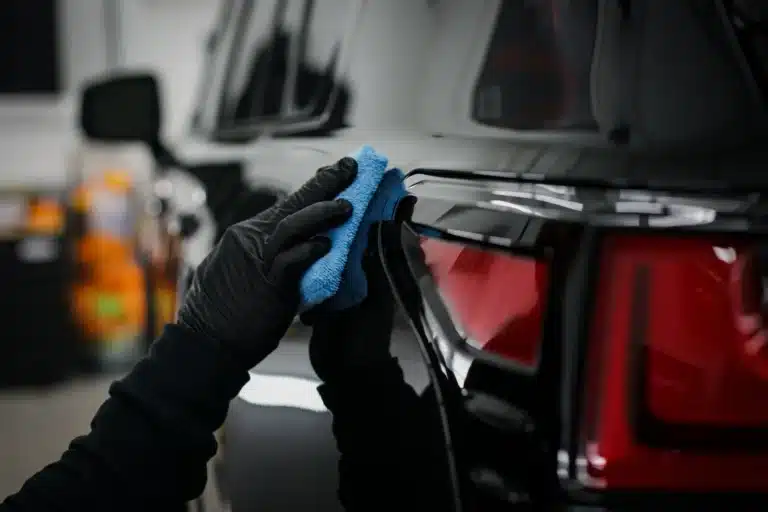
Common Myth: Ceramic Coating Makes Your Car Scratch-Proof
Ceramic coating does not make a vehicle scratch-proof. Even coatings marketed as 9H hardness can develop swirl marks, fine scratches, rock chips, and damage from sharp objects.
The 9H rating does not guarantee resistance to every real-world impact or abrasion. Ceramic coating improves surface protection and maintenance but cannot prevent all damage.
How to Reduce Scratches After Ceramic Coating
- Pre-Rinse Thoroughly: Remove loose dirt before washing.
- Use Clean Microfiber: Avoid contaminated wash mitts and abrasive brushes.
- Choose Compatible Shampoo: Follow the coating manufacturer’s recommendations.
- Dry Gently: Use clean microfiber towels.
- Remove Contaminants Promptly: Clean bird droppings and insect residue.
- Avoid Excessive Polishing: Abrasive products can wear away the coating.
For drivers in Foxdale who encounter construction dust or dirty roads, proper washing is essential to maintaining the finish.
When Should You Seek Professional Scratch Removal?
Seek professional inspection if scratches persist after washing, catch a fingernail, or appear to penetrate the clear coat.
A qualified technician can assess the damage and determine whether polishing or coating reapplication is necessary. For drivers in Farmwood, seasonal grime and frequent washing make careful paint maintenance especially important.
Before proceeding, ask whether the damage can be corrected safely, how much paint correction is needed, and whether the affected area requires a new coating application.
Protect Your Paint With Professional Ceramic Coating
Ceramic coating enhances gloss, protects a properly prepared finish, and simplifies routine maintenance, but it does not eliminate existing scratches.
For ceramic coating in Addison, IL, Xtreme Auto Glass & Window Tint offers coating packages with different paint correction levels. With 16+ years of automotive service experience highlighted on its website, the company emphasizes proper preparation and application.
Ready to protect your vehicle’s finish? Contact us to discuss your paint condition and coating options.
People Also Ask
Can Ceramic Coating Hide Small Scratches?
Ceramic coating may slightly reduce the visibility of extremely fine marks in certain conditions, but it is not a scratch-filling repair product. Proper paint correction is a more reliable way to improve eligible surface scratches.
Can You Polish Scratches Out of a Ceramic-Coated Car?
Yes, but polishing can weaken or remove the coating in the treated area. A professional should evaluate the damage and determine whether the surface requires recoating after correction.
Does Ceramic Coating Prevent Swirl Marks?
Ceramic coating can provide limited resistance to light marring, but it cannot prevent every swirl mark. Clean washing equipment and proper maintenance techniques remain essential.
How Long Does Ceramic Coating Protect a Vehicle?
Protection varies by product, application, environmental exposure, and maintenance. Some professional ceramic coatings are designed for multi-year performance, but actual durability depends on the specific system and care requirements.