
Automotive window tinting blocks up to 99.9% of harmful ultraviolet (UV) rays and rejects up to 80% of near-infrared radiation. This specialized barrier dramatically drops cabin temperatures, shields delicate dashboard polymers, and prevents leather or fabric seats from fading, cracking, and deteriorating over time.
For car owners, a vehicle is far more than just a means of transportation; it is a substantial financial investment and an extension of personal style. Protecting this asset requires looking beyond mechanical maintenance and addressing the environmental elements that degrade a vehicle every single day. The sun is a constant threat to your car’s interior. Solar energy radiating through unprotected glass turns automotive cabins into high-heat greenhouses, ruining upholstery, warping plastics, and making the driving experience highly uncomfortable.
The Physics of Solar Energy and Automotive Glass
To understand why a vehicle becomes an oven when left in the sun, it is necessary to examine how solar energy interacts with standard automotive glass. The sun emits energy across a broad spectrum, but three primary wavelengths are responsible for heat and interior damage:
- Ultraviolet (UV) Radiation (200–400 nm): Comprising roughly 3% of solar energy, UV radiation is divided into UV-A, UV-B, and UV-C rays. While standard glass blocks UV-B, it allows UV-A rays to penetrate deeply. UV radiation is the primary catalyst for photo-degradation, breaking down chemical polymers in leather, vinyl, and fabrics, which leads to bleaching and structural failure.
- Visible Light (380–780 nm): Making up about 44% of solar energy, this is the spectrum visible to the human eye. When intense visible light strikes dark interior surfaces, it is absorbed and converted into thermal energy.
- Infrared (IR) Radiation (780–2500 nm): Accounting for approximately 53% of the sun’s energy, infrared light is felt directly as radiant heat. When IR rays pass through untreated glass, they heat up the cabin materials directly.
Standard, untreated factory glass acts as an open window for both UV-A and near-infrared rays. When these wavelengths pass through the glass, they are absorbed by dense interior materials, such as the foam padding, leather upholstery, and polyurethane dashboard components. These materials store the energy and radiate it back into the cabin as long-wave infrared heat. Because this trapped heat cannot easily escape back through the glass, it creates a severe greenhouse effect, driving interior temperatures up to 60°C (140°F) when ambient outside temperatures are only 32°C (90°F). Drivers looking to mitigate this structural threat often seek out professional window tinting in Elmhurst, IL, to ensure their cabins remain shielded from intense seasonal heat spikes.
Solar Heat Gain Coefficient (SHGC) Explained
In the architectural and automotive tint industries, solar performance is often quantified by the Solar Heat Gain Coefficient (SHGC). This value represents the fraction of incident solar radiation admitted through a window, both directly transmitted and absorbed, and subsequently released inward.
An untreated automotive window typically exhibits an SHGC of around 0.85, meaning 85% of the sun’s total energy enters the cabin. When a high-performance film is applied, this coefficient can drop below 0.30. By decreasing the SHGC, the rate of thermal accumulation slows down dramatically, preventing the rapid internal spikes that degrade synthetic bonding agents and dry out natural leather fibers.
How Specialized Window Film Controls Heat and Rejects Radiation
Modern window tints are highly engineered, multi-layered optical systems designed to manage specific wavelengths of solar energy. Instead of merely darkening the windows, advanced films rely on sophisticated material science to redirect and absorb solar energy before it enters the vehicle’s interior.
The performance of high-quality window tinting relies on three primary mechanisms:
Incoming solar energy interacts with the window film layer in three main ways: a portion is reflected, thereby deflecting infrared and UV radiation; some is absorbed and dispersed as heat; and the remainder is selectively transmitted as visible light, maintaining clarity while reducing glare and heat buildup.
- Reflection: Advanced films, particularly those using nanoceramic or metallic technologies, are engineered to reflect infrared and ultraviolet wavelengths away from the vehicle. This prevents the heat from ever passing through the glass barrier.
- Absorption: The film captures certain thermal wavelengths within the glass itself. As the vehicle moves, the ambient airflow over the exterior glass safely pulls this absorbed heat away, dissipating it into the outside air rather than letting it bleed into the cabin.
- Controlled Transmission: High-performance films allow a chosen percentage of safe visible light to pass through for clear visibility while filtering out the destructive components of the solar spectrum.
When exploring specialized installations, local drivers frequently compare options for premium window tinting in Elmhurst to find high-rejection films that actively combat both visible glare and invisible thermal radiation. These advanced films filter harsh sunlight and heat, allowing natural light in while reducing excessive interior heat buildup.
The Evolution of Film Layers
A single sheet of high-quality window film is typically constructed from multiple distinct micro-layers, each serving a dedicated purpose:
- Scratch-Resistant Hard Coat: The outermost layer facing the interior of the car, formulated to withstand daily cleaning and glass roll-down friction.
- Optically Clear Polyester: The core structural base that houses the specific heat-rejecting compounds, such as nano-ceramic particles or carbon matrices.
- Mounting Adhesive Layer: A high-tensile, pressure-sensitive adhesive designed to fuse perfectly with the glass surface without distorting clarity.
- UV Inhibitor Barrier: A crucial chemical layer formulated to absorb incoming ultraviolet rays, protecting both the interior of the vehicle and the adhesive system from premature yellowing or failure.
Preserving Automotive Upholstery and Interior Components
The interior of a modern premium vehicle features a precise blend of organic and synthetic materials, including top-grain leathers, durable vinyl composites, soft fabrics, and molded plastics. Each of these materials reacts poorly to prolonged heat and UV exposure. Professional window tinting is an essential tool for automotive protection, as it stops the structural breakdown of these delicate surfaces.
During a recent vehicle evaluation for a client near the vibrant commercial hub of the Downtown City Center, we noted that unprotected side windows allowed intense solar exposure to bleach the upper portions of the leather bucket seats. This damage occurs because UV radiation breaks the molecular bonds within fibers and leathers, causing them to lose their natural flexibility.
UV radiation exposure breaks down polymeric and molecular bonds in interior materials. In organic surfaces like leather, it evaporates essential natural oils, causing fibers to tighten, harden, and eventually crack. In synthetic surfaces such as vinyl, it extracts plasticizers, leading to outgassing, surface degradation, and a brittle dashboard over time.
The Impact on Leather and Vinyl
Leather requires a delicate balance of moisture and natural oils to remain supple. When subjected to intense infrared heat, these oils evaporate, causing the leather fibers to shrink, tighten, and lose elasticity. When passengers sit on dried-out leather, the brittle surface cracks under pressure.
Vinyl and molded plastics experience a similar degradation process known as outgassing. The chemical plasticizers that keep dashboards pliable are drawn out by intense heat, forming an oily film on the inside of the windshield. Once these plasticizers are lost, the dashboard becomes highly brittle, eventually leading to deep structural cracks that are costly to repair.
Fabric Shielding and Color Fastness
For vehicles equipped with cloth interiors, solar exposure attacks the synthetic dyes used to color the fabric. UV rays destroy chemical color bonds via photo-degradation, resulting in a dull, uneven appearance. Furthermore, the structural fibers weaken, leading to premature thinning and tearing in high-friction areas such as seat bolsters.
By investing in premium Elmhurst, IL window tinting, car owners demonstrate their commitment to preserving their investment. The film acts as a permanent sunscreen for the cabin, stopping fabric degradation and keeping the interior looking showroom-fresh for years.
Performance Metrics and Material Technologies
When exploring professional window tinting options, it is helpful to review technical specifications. Different material compositions yield varied levels of heat rejection and durability.
Material Specifications
Dye-Based Films
These films utilize a layer of non-reflective dye to absorb solar energy. While excellent for glare reduction and cost efficiency, they offer lower infrared heat rejection compared to advanced options and can fade over time.
Carbon-Based Films
Containing real carbon particles, these films are highly durable and never fade. Carbon provides excellent infrared rejection and a matte finish without interfering with cell signals or GPS systems.
Nano-Ceramic Films
The gold standard in window film technology, ceramic tints use non-conducting, microscopic ceramic particles. This configuration allows them to reject maximum levels of infrared heat and UV rays while remaining nearly invisible, offering maximum visibility without sacrificing performance.
Key Performance Indicators (KPIs)
To select the ideal film for your driving needs, look for these three industry-standard metrics:
- Total Solar Energy Rejected (TSER): A comprehensive metric measuring the total percentage of solar energy (UV, visible, and infrared) that a window film blocks or deflects away from the vehicle. Higher TSER percentages indicate superior overall thermal management.
- Visible Light Transmission (VLT): The percentage of visible light that passes directly through the window film. A lower VLT percentage indicates a darker tint, while higher VLT values mean the film appears clearer.
- Infrared Rejection (IRER / IRR): The specific percentage of infrared light blocked by the film. This metric directly reflects the tint’s ability to keep the interior surface cool by eliminating radiant heat.
Comparing Window Tint Technologies
The table below outlines how different film compositions perform across key metrics, helping you choose the right film for your specific needs:
| Film Technology Type | Average TSER Efficiency | UV Radiation Protection | Infrared Heat Rejection | Signal Interference Risk | Material Longevity Expectancy |
| Standard Dyed Film | 30% – 45% | Up to 99% | Minimal (Low Absorption) | None | Short (2 to 5 Years) |
| Metallic Composite | 45% – 60% | Up to 99% | Moderate (High Reflection) | High (Blocks Cellular/GPS) | Moderate (5 to 8 Years) |
| Advanced Carbon | 50% – 65% | Up to 99% | High (Excellent Absorption) | None | Long (Lifetime Performance) |
| Premium Nano-Ceramic | 60% – 80% | Up to 99.9% | Extreme (Maximum Filtering) | None | Longest (Lifetime Performance) |
Debunking the Window Tint Darkness Myth
A common misconception in the automotive industry is that a window film must be dark or blacked out to provide effective heat rejection. Many drivers believe that a lighter film will not keep a car cool.
This myth stems from early window tinting technologies, when simple dyed films relied on dark pigments to absorb visible light. While dark dyed films reduce glare by blocking visible light, they do very little to filter out invisible infrared or ultraviolet radiation.
Sunlight affects different window films differently. Dark dyed films primarily reduce visible light but still allow significant heat to pass through. In contrast, clear ceramic films are engineered to block infrared and UV radiation directly, helping maintain a cooler interior without heavily reducing visibility.
With modern developments in nano-ceramic and infrared-blocking technologies, optical clarity no longer dictates thermal performance. High-performance ceramic films can be engineered to achieve a high VLT, meaning they appear virtually transparent while still delivering high TSER and blocking over 90% of infrared heat.
During an automotive consultation for a classic car collector along the residential corridors of the Spring Road commercial district, we applied a nearly transparent 70% ceramic film to a vintage windshield. This project demonstrated that modern Elmhurst window tinting solutions maintain a factory-original appearance while gaining maximum heat rejection and UV protection. Drivers do not need to compromise night visibility or alter their vehicle’s aesthetics to enjoy excellent heat control.
Why Discerning Vehicle Owners Invest in Premium Tinting
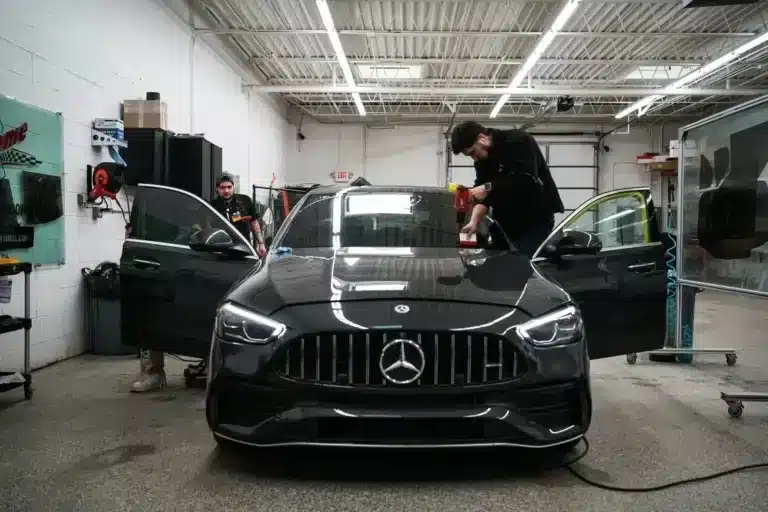
For individuals who view their vehicles as more than simple appliances, every modification must meet high standards of quality and performance. High-performance window tinting is trusted by automotive enthusiasts and luxury car owners because it delivers tangible, high-end protection that preserves the driving experience.
Premium window tinting provides several key benefits, including improved thermal comfort by reducing cabin heat and minimizing hot surfaces, increased HVAC efficiency by reducing air-conditioning strain and energy load, and better retention of resale value by helping prevent interior fading, leather damage, and cracking over time.
- Uncompromising Thermal Comfort: Stepping into a car that has sat in the summer sun can be incredibly uncomfortable. Premium window film prevents interior surfaces from reaching skin-burning temperatures, making the cabin instantly welcoming.
- Reduced Strain on the HVAC System: By blocking solar heat from entering the cabin, window tinting reduces the load on your vehicle’s air conditioning system. This allows the cabin to cool much faster, reduces fuel or battery consumption, and extends the lifespan of air-conditioning components.
- Preserving Long-Term Resale Value: A vehicle’s interior condition heavily influences its future valuation. Cracked leather dashboards and faded seats can significantly lower a car’s appraisal value. Investing in premium window film preserves these delicate materials, protecting your vehicle’s future market value.
Professional Application vs. DIY Kits
While DIY window tinting kits are widely available online, achieving flawless, long-lasting results requires specialized precision and controlled environments.
- Environmental Contamination Control: Applying window film requires a dust-free environment. Even a tiny speck of airborne dust or lint trapped under the film can create an unsightly air bubble and cause premature peeling. Professional installation bays utilize specialized filtration systems to eliminate these contaminants.
- Complex Compound Curve Fitting: Modern automotive windows feature complex, multi-axis curves, particularly rear windshields. Standard DIY films will wrinkle or crease when applied to these surfaces. Professionals use specialized heat-shrinking techniques to precisely mold the film to the shape of the glass without damaging its internal structure.
- Advanced Adhesion and Edge Trimming: Amateur installations often leave large, uneven gaps around window borders or lead to peeling edges along the window seals. A seasoned specialist trims the film exceptionally close to the edge of the glass for a clean, factory-installed look that stands up to daily roll-down use.
We observed the consequences of amateur installations during an inspection for a vehicle owner in the York & Vallette Streets neighborhood. The vehicle had a DIY film that had degraded into a distorted, purple sheet filled with large air bubbles, significantly reducing rear visibility. Replacing it with professionally installed, commercial-grade window tinting fully restored optical clarity and heat rejection performance.
About Our Team
At Xtreme Window Tint, we bring years of specialized automotive experience and precision craftsmanship to every vehicle we service. Operating out of a climate-controlled, dust-filtered facility, our certified technicians utilize the industry’s highest-grade nano-ceramic and carbon films. We treat every vehicle, from daily commuters to high-end exotic cars, with absolute care, ensuring flawless edge cuts, zero bubbling, and maximum thermal protection. Our long-standing reputation is built on transparent communication, technical expertise, and a commitment to preserving your automotive investment.
Protect Your Investment with the Cleanest Detailing Services
Your vehicle deserves meticulous care and top-tier surface protection. Do not let solar heat and destructive UV radiation compromise your car’s interior comfort or diminish its resale value. Ensuring your upholstery stays pristine requires a dedication to exceptional quality and precision craftsmanship.
We specialize in high-end automotive preservation, balancing precise technique with industry-leading materials to safeguard every surface of your prized vehicle. Whether you want to drop cabin temperatures, stop interior fading, or maintain a flawless finish, our team delivers pristine, professional results tailored to your exact specifications. Explore our full suite of premium automotive protection options and premium care solutions by visiting Xtreme Auto Glass & Window Tint. Ready to elevate your vehicle’s comfort and protection? Contact us today to schedule your private consultation and experience true automotive detailing perfection.
People Also Ask
Does window tinting block all types of UV radiation?
High-quality automotive window films block 99% to 99.9% of both UV-A and UV-B radiation. While standard automotive glass inherently blocks most UV-B rays, it allows harmful UV-A rays to pass through. Professional window tinting seals this gap, offering complete full-spectrum UV protection.
How long does high-quality ceramic window tint last on a car?
When installed by a trained professional, premium nano-ceramic and carbon-based window films are engineered to last the lifetime of the vehicle. These advanced films use stable inorganic compounds that do not fade, discolor, or purple over time, and they are typically backed by a comprehensive manufacturer’s lifetime warranty.
Can window film be safely applied to the front windshield?
Yes, clear nano-ceramic window films can be safely applied to the front windshield to provide heat rejection without impacting night vision. However, compliance depends on local regulations. Many regions permit a completely clear film (such as 70% to 80% VLT) across the entire windshield, or allow darker tints exclusively along the top several inches (the AS-1 line). Always review your local window tinting laws before installation.
Will aftermarket window tint interfere with my vehicle’s electronics?
Advanced nano-ceramic and carbon-based window films do not interfere with electronic signals. Older metallic tint options can disrupt radio, GPS, satellite, and cellular frequencies. Choosing non-conductive ceramic options ensures that your smartphones, navigation systems, and keyless entry functions operate flawlessly.