


A properly bonded ceramic coating is confirmed when it chemically integrates with the vehicle’s clear coat and delivers consistent hydrophobic performance, uniform gloss, and stable resistance to contamination after curing. The most reliable verification methods include observing water behavior, evaluating surface slickness, and checking visual uniformity across panels after the full curing window.
If bonding is incomplete, early indicators typically appear within the first 24–72 hours and include uneven water beading, inconsistent gloss, and patchy surface behavior. These issues usually trace back to surface preparation or curing environment conditions rather than product failure.
What Proper Ceramic Coating Bonding Means
Ceramic coating bonding is a controlled chemical reaction rather than a surface-level coating effect. Modern coatings based on silicon dioxide (SiO₂) form a cross-linked molecular network that anchors into the vehicle’s clear coat. This creates a semi-permanent protective layer that reduces surface energy and improves resistance to environmental contaminants.
In professional detailing environments, bonding success depends on three foundational variables:
- Surface preparation quality: complete removal of polishing oils, silicones, and residues
- Application control: correct spread rate and leveling without solvent trapping
- Curing stability: consistent temperature and humidity during initial bonding phase
Even premium coatings will fail to bond properly if any of these conditions are compromised.
Key Indicators of Proper Bonding
Visual Uniformity and Gloss Behavior
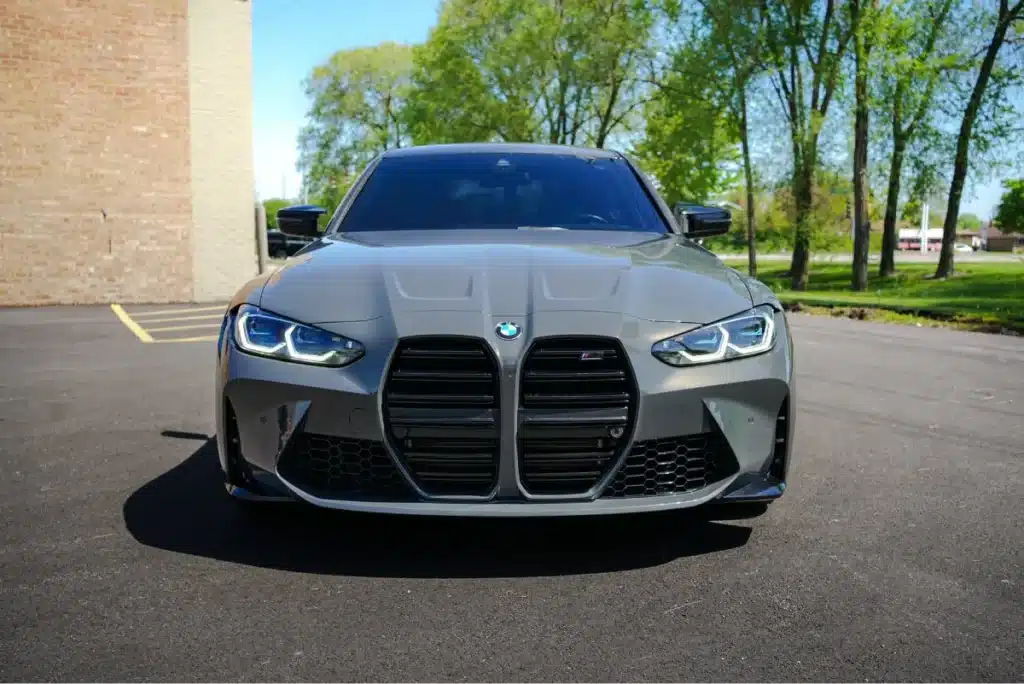
A properly bonded ceramic coating produces a deep, consistent gloss that does not vary between viewing angles or lighting conditions. This occurs because the coating smooths microscopic irregularities in the clear coat, allowing more uniform light reflection.
In Addison, ceramic coating applications, professional inspections often use LED panel lighting to detect inconsistencies that are not visible under natural daylight. Patchy reflection or “clouding” is a common early sign of uneven curing.
Hydrophobic Performance and Water Behavior
Water behavior is one of the most reliable indicators of coating integrity.
- Proper bonding: tight, spherical water beads that roll off quickly
- Partial bonding: mixed beading and sheeting behavior
- Failed bonding: flat spotting or slow water dispersion
Hydrophobic response should remain consistent across all panels. If one area behaves differently, it often indicates surface contamination or uneven coating distribution during application.
Surface Slickness and Friction Reduction
A properly bonded coating significantly reduces surface friction. When tested with a clean microfiber towel:
- The towel should glide smoothly with minimal resistance
- Drag or uneven friction suggests incomplete curing or contamination
- Inconsistent slickness across panels often indicates application variation
This tactile test is not a standalone test but provides strong secondary confirmation when combined with visual and hydrophobic evaluations.
Curing Timeline Stability
Ceramic coatings follow a structured curing process:
- Initial cure (0–24 hours): surface sets and stabilizes
- Early cure (24–72 hours): partial hydrophobic behavior appears
- Mid cure (3–5 days): bonding strength increases significantly
- Full cure (7–10 days): complete cross-linking and final performance
During this time, exposure to water, detergents, or environmental contamination can permanently disrupt the bonding process.
Comparison: Proper vs Improper Bonding
| Performance Factor | Proper Bonding | Improper Bonding |
| Gloss Appearance | Deep, uniform reflection | Patchy or dull areas |
| Water Behavior | Fast beading and runoff | Slow or inconsistent response |
| Contamination Resistance | High durability against grime | Dirt adheres easily |
| Surface Texture | Slick, low friction | Sticky or uneven |
| Long-Term Stability | Multi-year performance | Early degradation |
Step-by-Step Bond Evaluation Process
1. Initial Inspection (0–24 Hours)
At this stage, the coating is still stabilizing. Technicians verify:
- Even leveling across panels
- No streaking or high spots
- No environmental contamination during flash-off
Even minor dust exposure during this phase can compromise bonding integrity.
2. Early Cure Assessment (24–72 Hours)
This phase reveals the first functional signs of hydrophobicity.
- Light water exposure may show initial beading
- Uneven drying patterns indicate inconsistent curing
- Any premature washing can interfere with bonding formation
3. Mid Cure Validation (3–5 Days)
This stage provides a clearer performance picture:
- Controlled water testing across multiple panels
- Gloss consistency evaluation under directional lighting
- Verification of uniform surface response
At this stage, differences between properly bonded and compromised coatings become more apparent, which is why thorough inspection is essential to professional Addison, IL, ceramic coating evaluation and maintenance.
4. Full Cure Verification (7–10 Days)
Final evaluation includes:
- Complete hydrophobic performance check
- Resistance to environmental contaminants (dust, road film)
- Consistent slickness across entire surface
A coating that passes this stage is considered fully bonded and stable.
Core Ceramic Coating Terms
Hydrophobicity
The ability of a surface to repel water by minimizing adhesion, resulting in beading or sheeting behavior.
Cross-Linking Reaction
A chemical process where polymer molecules form a hardened silica-based network during curing.
Surface Energy Reduction
The decrease in a surface’s ability to attract contaminants, improving cleaning efficiency.
Nano-Ceramic Layer
A microscopic protective layer formed during curing that bonds directly to the clear coat.
Curing Window
The time period in which the coating transitions from liquid application to hardened structure.
Diagnostic Bond Verification Method
Professional installers often rely on structured evaluation systems rather than visual inspection alone. A reliable diagnostic approach includes:
- Hydrophobic consistency testing across all panels
- Optical clarity evaluation under controlled lighting
- Surface friction measurement using microfiber glide testing
When all three indicators align, the coating is considered fully bonded. If one metric deviates, such as strong gloss but weak hydrophobicity, it typically signals curing disruption or contamination during application.
Environmental Factors That Influence Bonding
Real-world conditions significantly affect coating performance and curing stability.
Temperature
Extreme heat can accelerate curing, while cold environments slow chemical reactions and extend bonding time.
Humidity
High humidity levels can interfere with solvent evaporation and disrupt polymer cross-linking.
Surface Preparation Quality
Residual polishing oils or silicones are among the most common causes of bonding failure.
Airborne Contaminants
Dust or airborne particles can embed into uncured coating layers, creating surface defects or weak spots.
In controlled professional environments, maintaining stable indoor conditions significantly improves consistency and durability outcomes.
Maintenance Behavior of a Properly Bonded Coating
Once fully cured, a properly bonded ceramic coating in Addison should simplify maintenance rather than complicate it.
Expected behaviors include:
- Dirt and grime release easily during rinsing
- Reduced need for aggressive scrubbing
- Improved resistance to road film and environmental fallout
- Stable hydrophobic performance after repeated washes
If cleaning becomes increasingly difficult within weeks of application, it often indicates incomplete bonding or curing disruption.
Applying Structured Diagnostic Standards in Practice
A consistent evaluation workflow improves reliability:
- Visual inspection under LED lighting
- Controlled water behavior testing
- Microfiber friction evaluation
- Full cure time verification (7–10 days minimum)
This structured method reduces false assumptions and ensures accurate bonding assessment.
Common Misunderstandings About Ceramic Coatings
Misconception 1: Water beading equals full curing
Hydrophobic behavior can appear early, but full chemical bonding requires several days.
Misconception 2: More layers improve performance
Excess layering can trap solvents and reduce curing efficiency.
Misconception 3: Gloss equals durability
Gloss is a visual effect and does not determine long-term chemical resistance.
About Xtreme Auto Glass & Window Tint
Xtreme Auto Glass & Window Tint provides professional automotive protection services including ceramic coating application, window tinting, and auto glass solutions. The company focuses on controlled application techniques, precise surface preparation, and disciplined curing to ensure long-term coating performance.
In real-world applications, coating durability depends heavily on technician expertise and environmental control during curing. This is especially important in services like ceramic coating in Addison, IL, where seasonal temperature shifts and humidity variations can influence curing consistency.
In Summary
Determining whether a ceramic coating has properly bonded requires evaluating multiple performance signals rather than relying on a single indicator. Hydrophobic behavior, gloss uniformity, surface slickness, and curing stability must all align across the full curing window.
When properly applied and fully cured, a ceramic coating delivers long-term protection, improved appearance, and easier maintenance by reducing surface energy and enhancing resistance to contaminants, as is commonly demonstrated by professional applications at Xtreme Auto Glass & Window Tint.
For professional application, inspection, or correction services, contact us today to ensure your coating is properly bonded, fully cured, and optimized for long-term performance.
Frequently Asked Questions
How long does ceramic coating take to fully bond?
Typically 5–10 days depending on temperature, humidity, and product formulation.
Can a poorly bonded coating be fixed?
Yes, but it usually requires removing and reapplying polish.
Why is my ceramic coating not beading water evenly?
This is usually caused by contamination, uneven application, or incomplete curing.
Does bonding improve over time?
Bonding stabilizes during curing but does not strengthen beyond full cure.
How do professionals verify bonding accuracy?
They combine hydrophobic testing, visual inspection, and controlled cure tracking methods.